Conversion · October 1, 2026
Landing Page vs. Homepage: Where Should Your Ads Send People?
Your homepage has to say everything. A landing page has one job. Here is why your ads and campaigns should point to a single-action page, and what that page needs.
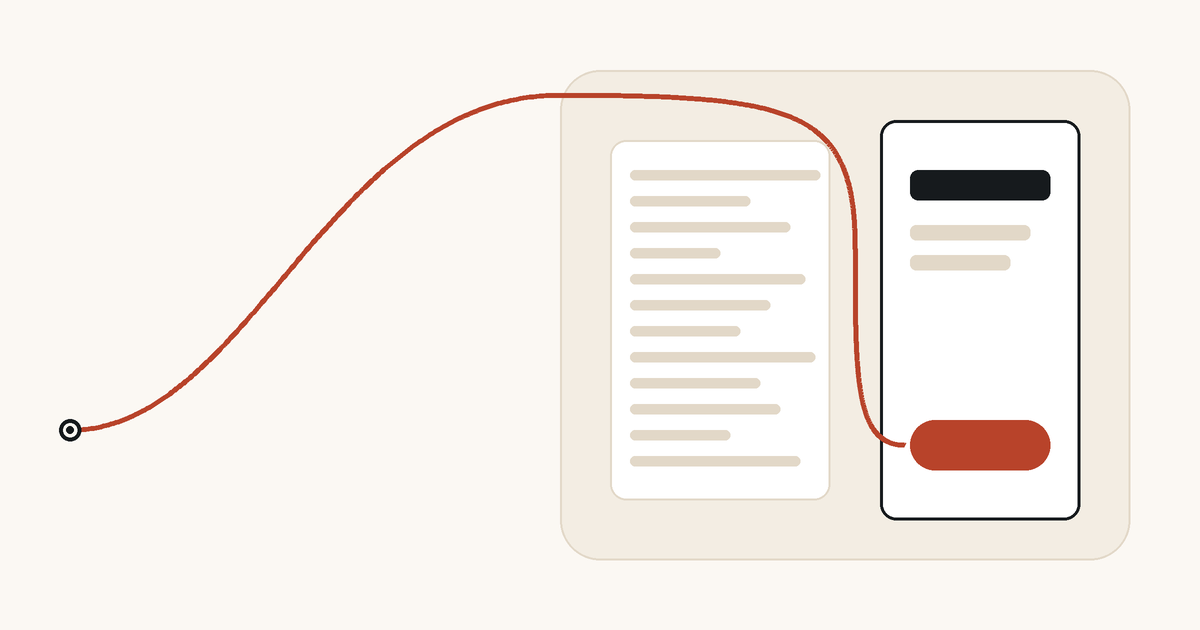
You are paying for every click from Google Ads, Meta or Microsoft Ads. So where those clicks land matters a lot. Many small businesses send all of their ad traffic to the homepage, because it is the page they worked hardest on. It is also, very often, the page least likely to turn a paid visitor into a customer.
This article explains the difference between a homepage and a landing page, when to use each, and what a landing page needs to convert.
What a homepage is for
Your homepage is the front door for everyone: returning customers, job applicants, partners, people comparing you with competitors, people who typed your name into Google. It has to introduce the business, link to every service, show where you are and build general trust.
That is a lot of jobs. A typical homepage has a navigation menu, several services, an about section, testimonials, a blog feed and a footer full of links. Every one of those is a path away from the action you actually want a paid visitor to take.
What a landing page is for
A landing page has one job: get a specific visitor to take one specific action. Book a consultation. Request a quote. Buy the starter package. Everything on the page supports that single action, and anything that does not is removed.
The key idea is message match. If someone clicks an ad for “same-week roof inspection in Austin,” the page they land on should say “same-week roof inspection in Austin” at the top, in big letters. They should know within a few seconds that they are in the right place.
Why homepages underperform for paid traffic
- Too many choices. Every extra link is a chance to wander off. People who wander rarely come back.
- Weak message match. The ad promised one thing; the homepage talks about everything.
- No single call to action. “Contact us,” “Learn more,” “Our services” and “Book now” all compete.
- Harder to measure. When all traffic goes to one general page, it is hard to see which campaign actually produced customers.
Landing page vs. homepage at a glance
| Homepage | Landing page | |
|---|---|---|
| Audience | Everyone | One audience |
| Offer | All services | One offer |
| Goal | Orientation and trust | One action |
| Navigation | Full menu | Minimal or none |
| Best for | Brand and organic visitors | Ads, email, campaigns |
What a high-converting landing page needs
1. A headline that matches the ad
Repeat the promise of the ad or email in plain words. Include the service and, for local businesses, the city or area.
2. A clear offer above the fold
On a phone screen, without scrolling, visitors should see what you offer, who it is for and the next step. A short subheading can add the key benefit: speed, price clarity, a guarantee.
3. One call to action, repeated
Use the same button text throughout the page (“Book my inspection,” “Get my quote”), and place it near the top, in the middle and at the end. Make it specific; “Submit” tells people nothing.
4. Proof close to the decision
Reviews, ratings, before-and-after photos, recognizable client logos, years in business, licenses and insurance. For local services, your Google rating and number of reviews are often the most persuasive proof you have.
5. Answers to the main objections
Think about why people hesitate: price, timing, trust, insurance, financing. Answer the top three on the page. A short FAQ works well.
6. A short form
Ask only what you need to respond well. Every extra field costs you submissions. If you need more detail, a multi-step form with simple questions first usually works better than one long page of fields.
7. Speed on mobile
Most local searches happen on phones. A page that takes several seconds to load loses visitors before they see your offer. Compress images, avoid heavy sliders and test on a real phone over cellular data.
When to send traffic to your homepage
The homepage still has a place. Brand searches (people typing your business name) should land there, as should general awareness campaigns where you are introducing the business rather than one offer. For everything else, especially paid search and offer-specific social ads, use a landing page.
How many landing pages do you need?
Start with one: for your strongest offer and your primary audience. When it is working, add pages for the next offer or for a second audience. If you serve both the US and Canada, consider separate pages for each country so prices, spelling and details match what visitors expect.
Measure what matters
Track the action, not just the visit. Set up conversion tracking for form submissions, bookings and calls, so you can see each campaign’s cost per lead and, ideally, cost per customer. Then you can improve the page one change at a time, which is the heart of conversion rate optimization.
Frequently asked questions
Can a landing page be part of my main website?
Yes. Most landing pages live on your own domain, for example yoursite.com/roof-inspection. You can simply leave it out of the main menu.
Should I remove the navigation menu?
For paid traffic, removing or reducing navigation usually helps, because it keeps visitors focused. Keep your logo and a phone number for trust.
How long should a landing page be?
As long as it needs to be to answer the questions that stop people from acting. Simple, low-cost offers can be short. Expensive or complex ones need more proof and detail.
Get a plan for your landing page
Our free assessment identifies the offer and audience your landing page should focus on and the gaps in your current funnel, with a recommended structure for the page. Our team prepares it and sends it within 1 business day. Get my free assessment.
Not sure which offer to grow first?
Get a free assessment. Our team will find the service with the most sales potential, the audience to target first and where you are losing sales, and send it to you within 1 business day.