Conversion · October 6, 2026
Conversion Rate Optimization for Small Businesses: A Practical Guide
Before you spend more on ads, get more customers from the visitors you already have. A step-by-step approach to finding and fixing the biggest leaks in your funnel.
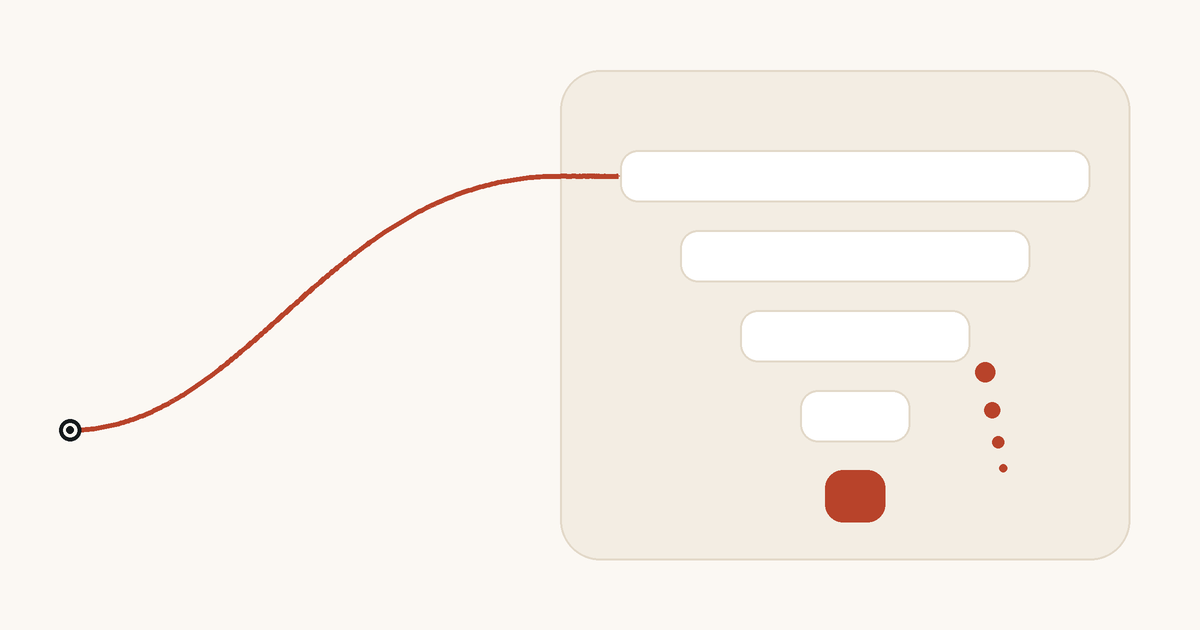
When sales are slow, the first instinct is to get more traffic: more ads, more posts, more SEO. But if your website and follow-up are leaking customers, more traffic just means paying for more people to leak out. Conversion rate optimization (CRO) is the practice of getting more customers from the visitors and enquiries you already have.
You do not need a big budget or complicated software to do it. You need to know where people drop off, fix the biggest leak first, and measure the result. This guide walks through that process for a typical service business.
What “conversion” means for a service business
A conversion is the action you want someone to take. For most service businesses there are two that matter:
- Visit to enquiry: someone on your website books, calls or fills in a form.
- Enquiry to customer: that person actually buys.
Your conversion rate at each step is simple: the number who took the action divided by the number who could have. If 1,000 people visit your landing page in a month and 30 submit the form, your visit-to-enquiry rate is 3%. If 10 of those 30 become customers, your close rate is about 33%.
Both numbers matter. Many businesses obsess over the website and ignore the second step, where a slow reply or no follow-up can quietly lose half the leads.
Step 1: Map your funnel and find the biggest leak
Write down the stages a customer goes through and roughly how many people are at each one each month:
- Get found: how many people see you (search impressions, map views, ad reach).
- Visit: how many reach your website or landing page.
- Enquire: how many contact you.
- Buy: how many become customers.
- Come back: how many buy again or refer someone.
You do not need precise numbers. Ballpark figures from Google Analytics, Google Business Profile insights, your inbox and your booking system are enough. Look for the stage where the drop is worst compared with what is normal for your industry, or simply the stage you have never looked at. That is your first fix.
Step 2: Fix the website leaks
If plenty of people visit but few enquire, the page is the problem. Check these first:
- Clarity in five seconds. Can a new visitor tell what you offer, who it is for and what to do next without scrolling? If not, rewrite the headline and the first lines.
- One clear action. One main button with specific text, repeated down the page. See our guide on landing pages vs. homepages.
- Mobile speed. Test your page on a phone using cellular data. Slow pages lose visitors before they read anything.
- Proof. Reviews, ratings, photos of real work, certifications, insurance. Put them near the call to action.
- The form. Remove every field you do not truly need. Make sure it works on mobile and that people see a clear confirmation.
- Pricing clarity. You do not have to publish exact prices, but a “starting at” figure or a typical range reduces anxiety and filters out poor-fit leads.
Step 3: Fix the follow-up leaks
This is where small businesses can win quickly, because most competitors are slow.
Reply fast
People who contact you are often contacting others too. The business that answers first, with a helpful reply, has a strong advantage. Aim to respond within an hour during business hours. An automatic confirmation email or text that says when they will hear from you buys time and builds trust.
Follow up with people who do not buy
Many people need more than one touch. A simple sequence of two or three friendly follow-ups over a week or two, answering a common question each time, can recover a meaningful share of “maybe later” leads. Keep it helpful, not pushy.
Respect email and text rules
If you follow up by email or text, follow the rules. In the US, CAN-SPAM covers commercial email and the TCPA covers marketing texts and calls. In Canada, CASL requires consent before sending commercial electronic messages. Replying to someone who contacted you about a service is generally fine; adding them to an ongoing newsletter needs consent.
Step 4: Test one change at a time
Once you know the biggest leak, make one change, measure for a few weeks, and keep it if it helps. Good first tests for small businesses:
- A clearer headline that names the offer and the area.
- A shorter form or a multi-step form.
- Moving reviews closer to the button.
- A specific button label instead of “Submit.”
- Adding a “starting at” price.
If you have enough traffic, A/B testing tools can split visitors between two versions. If you do not, a simple before-and-after comparison over similar periods is still far better than guessing.
Step 5: Track the right numbers
Set up conversion tracking so every form submission, call from the website and booking is recorded, ideally with the campaign or source that produced it. Then track, every month:
- Visitors to your main page.
- Enquiries and visit-to-enquiry rate.
- Customers and close rate.
- Cost per enquiry and cost per customer for paid campaigns.
These few numbers tell you where to focus next.
Common CRO mistakes
- Redesigning everything at once. You will not know what worked.
- Testing button colors before fixing the offer. Clarity, proof and speed matter far more than color.
- Ignoring the phone. For many local businesses, a large share of leads still call. Track calls too.
- Stopping at the form. A great page with slow follow-up still loses customers.
Frequently asked questions
What is a good conversion rate for a small business website?
It varies widely by industry, offer and traffic source, so comparing yourself with a generic benchmark is not very useful. Compare yourself with last month and aim to improve your weakest step.
Do I need a lot of traffic to do CRO?
No. With low traffic you cannot run formal A/B tests quickly, but you can still fix obvious problems like slow pages, confusing headlines, long forms and slow replies. Those often bring the biggest gains.
Should I fix conversion before spending on ads?
Usually yes. Every improvement in conversion makes every future ad dollar work harder.
Find your biggest leak for free
Our free assessment looks at each stage of your funnel, from getting found to repeat business, and points out where you are most likely losing sales, with the first fix to make. Our team, with 20+ years in digital marketing and conversion rate optimization (CRO), reviews every submission and replies within 1 business day. Get your free assessment.
Not sure which offer to grow first?
Get a free assessment. Our team will find the service with the most sales potential, the audience to target first and where you are losing sales, and send it to you within 1 business day.